


Dentists - Do You Know Your EBITDA?
 Unified Smiles : Mar 29, 2024, 12:01:59 PM
Dentists should know their EBITDA. Understanding this financial metric can help make informed decisions, evaluate practice value, & track financial...
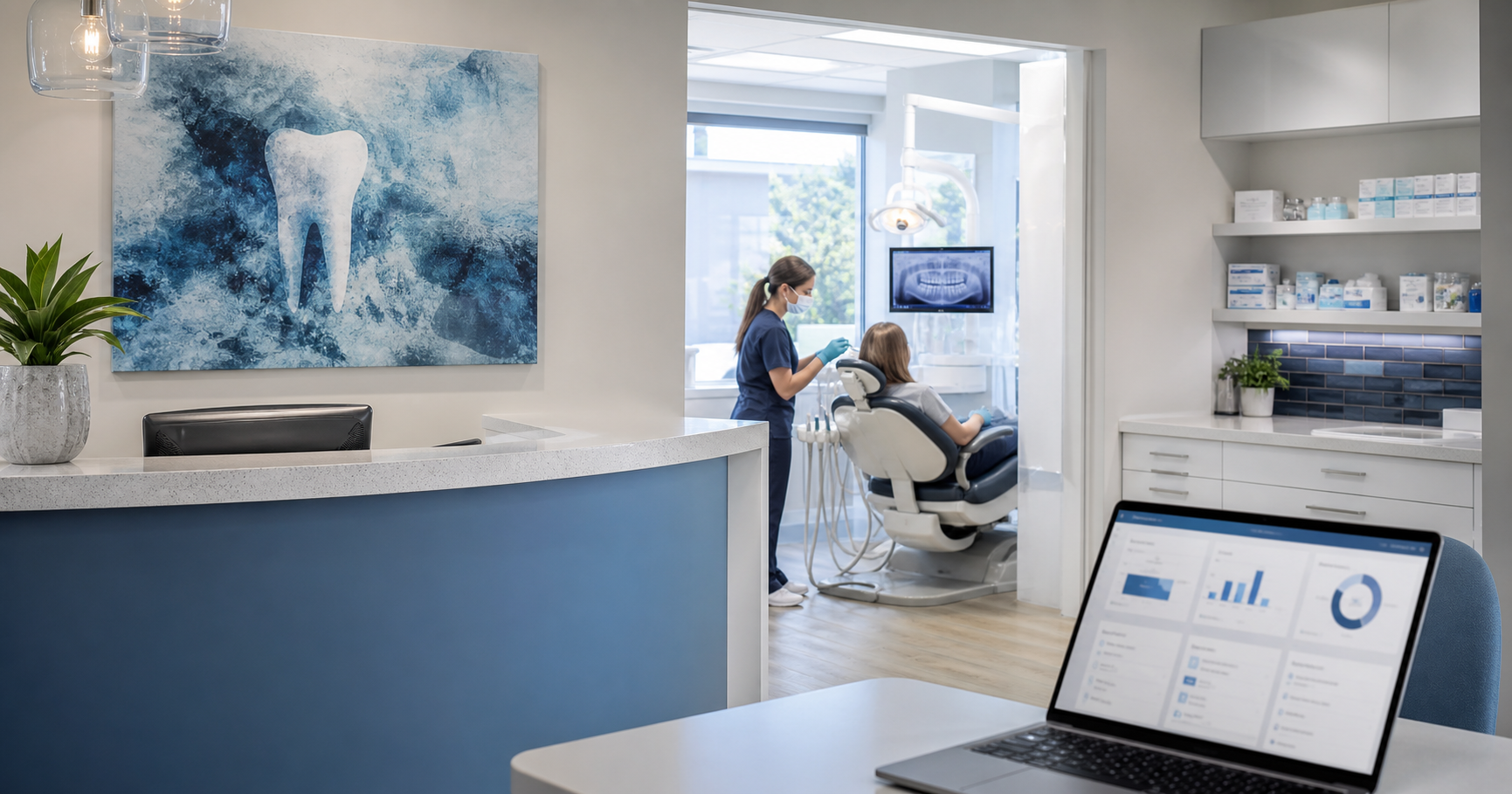
If you own or manage a small dental practice, you already know that overhead never takes a day off. Between clinical supplies, lab fees, equipment maintenance, and the dozens of other line items on your monthly P&L, the business side of dentistry demands just as much energy as the clinical side. The good news? A dental group purchasing organization (GPO) can help you reclaim a meaningful share of those costs, and this guide walks you through exactly how it works.
Unified Smiles built this resource for independent dental practice owners and office managers who want a clear, honest look at what GPO membership can do for their bottom line. You will find explanations of how dental GPOs operate, where the real savings show up, how to evaluate your options, and what to expect once you join. Along the way, we will share practical details that make it easier to have a confident conversation with your team about next steps.
A dental group purchasing organization is a membership-based entity that combines the purchasing volume of many dental practices to negotiate better pricing from suppliers. Think of it as strength in numbers. One practice ordering gloves and composites on its own has limited negotiating room. Hundreds of practices ordering together have real buying power, and that buying power translates directly into lower per-unit costs.
GPOs work with a wide range of vendors across categories like clinical supplies, dental labs, equipment, technology, financial services, marketing, compliance, and more. As a member, you gain access to the pre-negotiated pricing those vendors have agreed to, often without needing to change your current ordering workflows in a major way.
The key distinction worth understanding is that a GPO is not a distributor. It does not buy or sell products. It negotiates contracts, and you purchase directly from the vendors at the agreed-upon member pricing. You keep full control over what you buy and from whom.
Small and independent practices face a structural disadvantage when it comes to procurement. According to the 2025 Dental Economics-Levin Group Annual Practice Survey, 58 percent of practices reported higher overhead last year, and 55 percent identified rising overhead as their biggest challenge. Large corporate dental groups have dedicated purchasing departments that negotiate volume pricing across dozens or even hundreds of locations. A single-location practice buying supplies for one operatory team simply does not have that kind of pull.
A dental GPO closes that gap. By aggregating the purchasing volume of its entire member network, the GPO negotiates pricing that individual practices could not obtain on their own. For a small practice, this can mean an overall reduction of 20 to 30 percent on supplies. On clinical supplies specifically, some practices see savings reach up to 60 percent. In addition, some GPOs have partners with savings across every part of the practice including front office, software packages, patient financing, merchant processing and more.
Those savings show up in tangible ways. Your composite orders cost less per unit. Your lab fees drop. Your hygiene supply invoices shrink. Over the course of a year, the cumulative effect on your overhead can be substantial. Practices that actively take advantage of their GPO membership have reported annual savings of $30,000 or more, and that is money you can reinvest into patient care, staff benefits, new equipment, or simply a healthier profit margin.
Not all line items on your expense report are created equally when it comes to GPO savings. Understanding where the highest-impact opportunities tend to be can help you prioritize your evaluation.
This is often the single largest savings category. Items like gloves, composites, bonding agents, cements, impression materials, and disposable instruments are purchased frequently and in volume. Even a modest per-unit reduction adds up quickly across hundreds of orders per year. Through a GPO, savings on clinical supplies can reach well into the double digits.
Lab work for crowns, bridges, dentures, and other restorative and prosthetic cases represents a significant chunk of practice spending. GPO partnerships with dental labs can give you access to preferred fee schedules that reduce your per-case cost, which directly improves your margin on those procedures.
Whether you are maintaining existing handpieces and sterilizers or investing in new imaging or scanning technology, equipment costs add up fast. GPO members can access pre-negotiated pricing on equipment purchases and repair services. This can also include promotional deals on items like intraoral scanners, sensors, and operatory chairs.
Beyond supplies, many GPOs negotiate pricing on services like merchant processing, payroll, patient financing, and insurance. These are recurring costs that can quietly drain your bottom line. Reducing merchant processing fees alone has saved some practices thousands of dollars per year.
A well-connected GPO may also connect you with practice management software, marketing services, patient communication tools, and compliance solutions for OSHA, HIPAA, and infection control. These are areas where many practices either overspend or go without, and group pricing can make quality solutions more attainable.
Here is something that does not get talked about enough: the difference between a GPO that hands you a login and a GPO that gives you a real person who understands your practice. Having a dedicated Member Specialist with actual dental office experience supporting your practice can make a surprisingly big difference in the savings you realize.
A good Member Specialist does not just point you to a price list. They review your current vendors and spending across supplies, labs, equipment, and services. They identify specific opportunities you may not have noticed. They connect you with the right vendor partners and help your team through onboarding and implementation. And they check in regularly to make sure you are capturing every dollar of value available to you.
At Unified Smiles, every member is paired with a Member Specialist who brings real-world dental office experience to the table. These are people who have worked as dental assistants, hygienists, and front office managers. They know the day-to-day realities of running a practice because they have lived them. That background means they speak your language, understand your workflows, and can spot savings opportunities that a generalist would miss.
It is one thing to have access to pre-negotiated pricing. It is another thing entirely to have someone in your corner who proactively brings you new opportunities, follows up on rebates, and coordinates with your team so nothing falls through the cracks. If you have been navigating the vendor landscape alone up until now, a dedicated Member Specialist changes that experience completely.
Not every GPO is the right fit for every practice. Before committing, it helps to ask the right questions and know what to look for. Here is a practical framework for evaluating your options.
How many vendors does the GPO work with, and do they cover the categories that matter most to your practice? A broad vendor network across clinical supplies, labs, equipment, technology, financial services, and operational support gives you more flexibility. Unified Smiles, for example, works with over 125 vetted vendor partners across nearly every category a dental practice touches.
What does membership cost, and what are the terms? Look for transparency around fees and ask whether there are purchasing minimums or long-term contracts. A GPO that operates on a month-to-month basis after a short initial term gives you the freedom to stay only as long as you are seeing results.
Does the GPO assign a real person to your account, or is the experience purely self-service? As discussed above, having a dedicated specialist with dental industry knowledge can be the difference between modest savings and meaningful overhead reduction. Ask about the background and experience of the support team.
A quality GPO should never require you to switch suppliers, change products, or follow mandated purchasing lists. You should always retain full control over what you buy, from whom, and when. The GPO's role is to give you access to better pricing, not to dictate how you run your practice.
Hearing from other independent practices about their experience can help you set realistic expectations. Look for case studies or member stories that include specific savings figures and describe the nature of the support they received.
If you have decided that a GPO makes sense for your practice, the process of getting started is more straightforward than you might expect. Here is what a typical onboarding journey looks like.
Use the evaluation criteria above to narrow your options. Visit the GPO's website, review their vendor list, and schedule a conversation with their team. At Unified Smiles, you can quickly sign up online or schedule a chat to walk through how membership works for your specific situation.
Once you join, the GPO should walk you through setup. This typically includes a review of your current spending, an introduction to the vendor partners relevant to your practice, and guidance on how to access pre-negotiated pricing.
Your Member Specialist or onboarding team reviews your existing invoices and purchasing habits. This step identifies where your biggest savings opportunities are hiding. Many practices are surprised to learn how much they could be saving on items they order every single month.
You begin placing orders through your GPO's negotiated pricing. This does not have to happen all at once. Most practices start with one or two high-impact categories and expand from there. There is no pressure to switch everything overnight.
The best results come from ongoing engagement. Check in with your Member Specialist regularly, review your savings reports, and stay open to new vendor partners or services that could improve your overhead picture even further.
Understanding your ROI helps you make a confident decision about membership and lets you measure the value over time. The math is simpler than you might think.
Start with your total annual membership cost. Then compare your pre-GPO spending on supplies, labs, and services to your post-GPO spending in those same categories. The difference is your gross savings. Subtract your membership cost from the gross savings, and you have your net return.
For many practices, the membership pays for itself during the first 30 days. Engaged members of Unified Smiles have reported annual savings of $30,000 or more, putting the return on investment at a significant multiple of the membership cost. The ROI reported by Unified Smiles members is typically in the range of 10 to 15 times what they pay for membership.
Keep in mind that ROI is not just about hard-dollar savings. The time your team saves by not having to shop around, compare quotes, and negotiate with vendors has real value too. That time goes back into patient care, which supports the overall health of your practice.
There are a few myths that keep independent practices from exploring GPO membership. Let us clear them up.
Not at all. A reputable GPO supports your independence rather than limiting it. You retain complete ownership of your practice, make all your own clinical and business decisions, and choose which vendors and products to use. Nobody dictates your purchasing.
No. In fact, small and independent practices often see the greatest relative impact from GPO membership because they have the least negotiating power on their own. A single-location practice with limited procurement staff stands to gain the most from having pre-negotiated pricing and a dedicated specialist doing the legwork on their behalf.
No. You switch only where it makes sense for your practice. If you are happy with a current vendor and they are already on the GPO's partner list, you may simply pay less for the same products. If they are not on the list, you are under no obligation to change.
Absolutely not. A GPO helps you access group pricing while keeping your practice 100 percent yours. There is no equity exchange, no operational mandates, and no loss of autonomy. Your name stays on the door and your clinical decisions stay in your hands.
Pairing your GPO membership with procurement technology can take your savings even further. Digital procurement platforms allow you to view your GPO's negotiated pricing alongside your current supplier pricing in real time. This gives you instant visibility into where you can save on each order.
These tools also help streamline the ordering process itself. Rather than calling vendors, comparing invoices manually, and tracking orders across multiple systems, a procurement platform centralizes your purchasing and gives your team a single place to order, compare, and manage inventory.
For growing practices or multi-location offices, procurement software adds another layer of value through budget controls, approval workflows, and reporting dashboards. This kind of visibility helps practice owners and office managers make more informed purchasing decisions and hold their teams accountable.
The quality and breadth of a GPO's partner network directly affects how much value you can extract from membership. Here are a few things to consider.
First, look at category coverage. A strong GPO should have partners across clinical supplies, hygiene products, dental labs, equipment, repair services, technology, financial services, compliance, marketing, education, and office supplies. The more categories covered, the more savings opportunities you have.
Second, pay attention to partner quality. The best GPOs vet their vendor partners carefully. You should be able to trust that the products and services offered through the network meet professional standards. Named vendor relationships with established companies are a good sign.
Third, consider exclusivity. Does the GPO limit you to one supplier per category, or do you have options? Having multiple partners in key categories gives you the flexibility to choose what works for your clinical preferences and practice style.
Numbers tell the story. Practices across the country are experiencing meaningful, measurable results from their GPO memberships.
One practice saves over $30,000 every year by taking advantage of GPO savings on clinical supplies, endodontic instruments, implants, handpieces, and other business-related purchases. They worked with their Member Specialist to continually identify new opportunities and used over 28 partner vendors across the network.
Another practice owner adopted a procurement platform to see negotiated pricing alongside current supplier rates in real time, and the impact was immediate: savings of thousands per month on clinical and non-clinical supplies, plus over $8,400 per year in merchant processing fee reductions alone.
Start-up practices are seeing results too. One new practice in South Carolina saved over $11,000 in just six months after opening, averaging more than $1,600 in monthly savings while still building its patient base. Another start-up in Georgia saved over $8,000 through September of its first year by using a mix of clinical, administrative, and technology partners through their GPO.
These are real savings from real practices. They did not happen because of complicated strategies or massive upfront investments. They happened because these dentists connected with a team that took the time to understand their goals and matched them with the right partners.
Saving money on supplies and services is not just about reducing overhead today. The real impact of GPO membership plays out over years as those savings compound and get reinvested into your practice.
When you reduce overhead by $20,000 or $30,000 per year, that capital can go toward upgrading your imaging equipment, investing in continuing education for your team, expanding your service offerings to include orthodontics or implants, or hiring additional staff to reduce patient wait times. Each of those investments generates more revenue and a better patient experience, which feeds back into practice growth.
Some members have used their savings to fund employee benefits like health insurance and 401(k) contributions. That kind of reinvestment improves retention and morale, which has a direct impact on the day-to-day quality of your practice.
The point is this: GPO savings are not just a line item on your P&L. They are a growth strategy that supports your long-term vision for the practice you are building.
Reducing overhead is one of the highest-impact moves an independent dental practice can make, and a dental group purchasing organization is one of the most practical tools available to help you do it. From clinical supplies and lab fees to equipment, technology, and administrative services, the savings add up in ways that directly support your profitability and your ability to deliver great patient care.
What makes the biggest difference, though, is having the right support behind those savings. A dedicated Member Specialist with real dental office experience can help you find opportunities you would not have spotted on your own, guide your team through the transition, and keep working alongside you as your practice grows.
If you are curious about what your specific savings picture could look like, consider scheduling a chat with the Unified Smiles team. There is no pressure and no obligation. It is simply a conversation between peers about how to help your practice keep more of what it earns. You can reach the team at 866-747-9007 or fill out a form on the Unified Smiles website to get started.
A dental GPO is a membership-based group that pools the purchasing volume of many practices to negotiate lower pricing from suppliers. Members access pre-negotiated rates on supplies, labs, equipment, and services while keeping full control of their purchasing decisions.
Most independent practices save 20 to 30 percent overall on supplies and services. On clinical supplies specifically, savings can reach up to 60 percent. Unified Smiles members who actively engage with their membership have reported saving $30,000 or more annually.
No. You choose which vendors and products to use. If your current supplier is already part of the GPO's partner network, you may simply pay less for the same products. There is no requirement to switch anything.
Unified Smiles pairs every member with a dedicated Member Specialist who has real dental office experience. Your specialist reviews your current spending, identifies savings opportunities, connects you with the right vendor partners, and checks in regularly to help you capture the full value of your membership.
Yes. Start-up practices often benefit significantly from GPO membership because they can access pre-negotiated pricing from day one. Unified Smiles offers programs specifically designed for new practices, helping you control costs and build efficient purchasing habits from the very beginning.
Not at all. A GPO gives you access to group-level pricing while you retain complete ownership and control of your practice. There are no equity exchanges, no operational mandates, and no restrictions on your clinical or business decisions.
A DSO typically acquires or manages dental practices, often taking an ownership stake and making operational decisions. A GPO, on the other hand, simply gives you access to better pricing through group buying power. You stay independent, keep your name on the door, and make all your own decisions.
 Unified Smiles : Mar 29, 2024, 12:01:59 PM
Dentists should know their EBITDA. Understanding this financial metric can help make informed decisions, evaluate practice value, & track financial...

 Rebecca Larson : Oct 16, 2026, 10:32:39 AM
Learn how to audit, reduce, and control dental practice overhead through smarter supply purchasing, vendor strategy, and group purchasing power.
 Unified Smiles : Jun 21, 2023, 1:54:08 PM
Choosing the right partners is essential to helping your dental practice grow. Learn more about the advantages of working with Unified Smiles here.