



Everything You Need to Know About Dental Overhead (2026)
Learn how to audit, reduce, and control dental practice overhead through smarter supply purchasing, vendor strategy, and group purchasing power.
As a dentist and practice owner, you already know that buying equipment is one of the bigger financial decisions your practice will face. A new CBCT system, a CAD/CAM mill, or even a set of handpieces can represent a significant portion of your annual overhead.
A good price on the wrong piece of equipment is not a good deal. The right approach starts with understanding what your practice actually needs, then finding dental equipment that fits at a price that makes financial sense over the long term.
This article walks through how to evaluate equipment purchases from fit to financing, explains how Unified Smiles Member Specialists can support you through the process, and covers two commonly misunderstood topics: manufacturer rebates and Section 179 tax deductions.
The right piece of equipment solves a specific problem or creates a measurable improvement in how your team works. Purchasing based on a promotion or a year-end deadline, without that clarity, can leave you with expensive technology sitting underutilized in an operatory.
Start with the clinical question. Are you replacing a failing unit, adding capacity for a growing patient base, or expanding into a new procedure? Each scenario calls for different specifications, price ranges, and timelines.
Consider your current case volume and realistic growth projections. A piece of equipment that makes sense for a practice performing 15 implant cases per month may not deliver the same return for a practice performing two. Matching capabilities to actual utilization is one of the most important steps in the process.
You'll also want to assess how the equipment integrates into your existing workflow. Will it require changes to your operatory layout? Does it connect to your current practice management software and imaging systems?
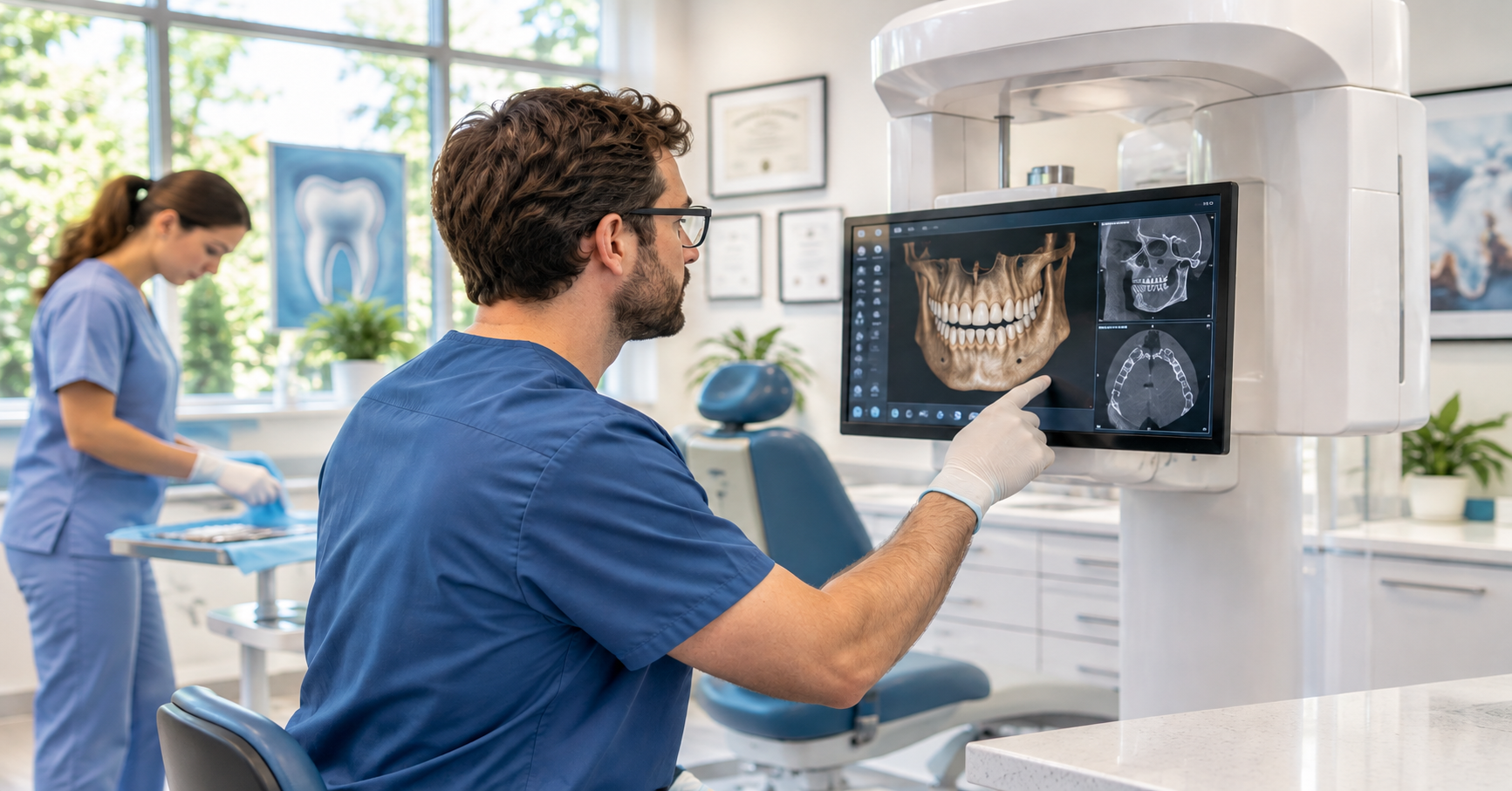
Space constraints matter as well. A CBCT unit that requires a dedicated room and specific electrical upgrades represents a different commitment than a chairside milling system that fits into an existing operatory. For example, evaluating intraoral scanners should include compatibility with your laboratory and existing software, not just the scanner itself.
Even well-chosen equipment can underperform if your team is not comfortable using it. Factor in training time and the learning curve when you evaluate your options. Some manufacturers include training with the purchase, while others charge separately.
A quote that looks attractive at first glance may leave out costs that add up over time. Evaluating the total cost of ownership, rather than the purchase price alone, gives you a much clearer picture of what you're committing to.
A thorough quote should account for more than just the unit itself. Review each of these categories when comparing options:
When you evaluate quotes with all of these factors in view, you can compare options on equal footing. A unit with a higher purchase price but lower maintenance costs may deliver better value over its lifetime than a less expensive alternative with limited warranty coverage. These ongoing expenses belong in your dental overhead planning.
Your Unified Smiles Member Specialist helps you approach equipment decisions with clarity by learning how your practice operates and what your priorities are. Each Member Specialist brings dental industry experience and works directly with you to understand your goals, clinical needs, and budget.
Your Member Specialist starts by learning how your practice operates today. What procedures do you perform most frequently? Where are the bottlenecks? What equipment is nearing the end of its useful life? This is a conversation designed to uncover opportunities specific to your practice. This personalized guidance is part of Unified Smiles membership.
Unified Smiles works with a network of trusted partners across equipment, repair services, and related categories. Rather than handing you a long list of vendors to sort through on your own, your Member Specialist narrows the options to the partners whose products and services align with your needs.
This approach is especially valuable for practices evaluating multiple pieces of equipment at once, such as during an operatory buildout or a technology upgrade.
Manufacturer rebates can reduce the effective cost of dental equipment, but the details vary from one program to the next. Understanding how they work helps you plan purchases without overestimating the savings.
Each rebate program sets its own eligibility requirements, qualifying purchase windows, required documentation, and submission deadlines. Requirements vary by manufacturer and can change between promotional periods. Always confirm the written terms before counting a rebate toward your purchase budget.
Documentation typically includes a completed rebate form, a copy of your invoice, and sometimes proof of installation or serial numbers. Do not count a rebate as a confirmed cost reduction until it has been approved and paid.
Rebates are promotional programs that manufacturers can modify or cancel. Whether rebates can be combined with other offers or pre-negotiated pricing depends entirely on each program's written terms. Confirm stacking eligibility in writing before assuming multiple programs will apply to the same purchase.
Your Unified Smiles Member Specialist can help you find savings opportunities, identify applicable manufacturer rebates that are available to members of Unified Smiles no matter what promotions or dealers that were used in the sales process.
Section 179 of the Internal Revenue Code allows dental practices to elect to deduct eligible costs of qualifying business equipment, subject to applicable limits, in the tax year it is placed in service rather than depreciating it over several years. Qualifying items generally include dental chairs, imaging systems, handpieces, autoclaves, and CAD/CAM units.
"Placed in service" means the equipment is installed, operational, and ready for use in your practice during the tax year you claim the deduction. The IRS outlines the general rules for depreciation and Section 179 elections.
Section 179 interacts with your practice's taxable income, entity structure, and state tax rules in ways that are not always straightforward. An ADA News interview with a dental CPA explains why you should review the cash-flow implications with your accountant before making equipment purchases based primarily on potential tax benefits. A deduction reduces taxable income, but it does not reimburse the purchase price. Equipment should make clinical and business sense first.
A smart equipment purchase starts with understanding your practice's needs, evaluating the full cost of ownership, and working with people who know the dental industry.
Unified Smiles helps independent dentists approach equipment decisions with clarity and confidence. That means dedicated Member Specialists who understand your goals, a network of trusted partners with pre-negotiated pricing, and the support to compare options without pressure.
If you're planning an equipment purchase and want a fresh perspective on the process, reach out to Unified Smiles. Call us at 866.747.9007 or connect with a Member Specialist who can help you find the right fit at the right price.
Start with the clinical need the equipment addresses and the case volume that will support it. Then evaluate workflow compatibility, space requirements, and total cost of ownership including installation and maintenance.
Unified Smiles pairs you with a dedicated Member Specialist who learns your practice needs, connects you with trusted equipment partners, and helps compare quotes. You benefit from pre-negotiated pricing while retaining full decision-making authority.
No. Rebate eligibility, stacking rules, and payout timing vary by manufacturer and program. Unified Smiles Member Specialists help identify applicable rebates available to our members on top of supplier promotions.
Section 179 generally applies to tangible personal property used for business purposes, such as dental chairs, imaging systems, and CAD/CAM units. The equipment must be placed in service during the tax year. Consult your CPA to confirm eligibility.
No. Equipment should make clinical and financial sense before you factor in tax benefits. A Section 179 deduction reduces taxable income but does not reimburse the cost. Your CPA can help evaluate how it fits your overall strategy. Looking for a new CPA? Unified Smiles refers its members to vetted CPAs with dental industry experience that fit your practice needs.
Total cost of ownership includes the purchase price plus installation, software licensing, maintenance, warranty coverage, training, and financing over the equipment's useful life. Unified Smiles Member Specialists help you evaluate these factors across multiple vendors.
Learn how to audit, reduce, and control dental practice overhead through smarter supply purchasing, vendor strategy, and group purchasing power.
For dental practices, outsourcing payroll makes sense. With so many details, laws, regulations, & guidelines; it can be challenging to keep it...
Dentists should know their EBITDA. Understanding this financial metric can help make informed decisions, evaluate practice value, & track financial...